Industrial Air Filtration Systems for Cement, Steel & Chemical Industries
657 Views
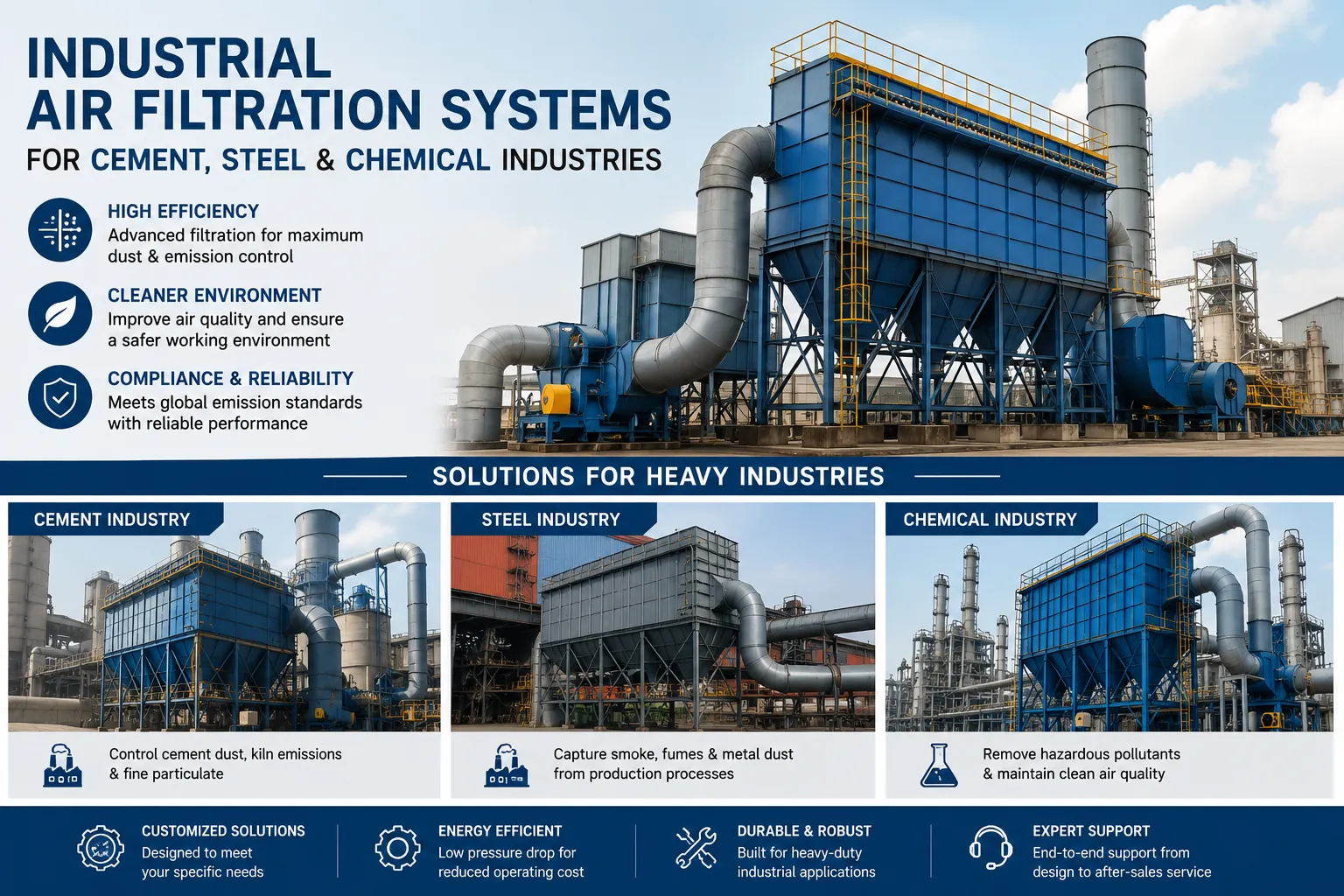
Modern industries get increasing pressure to keep production areas clean, while still meeting tough environmental rules, and audits. Industrial air pollution control systems are a big part of this work, because they reduce airborne contaminants, make worker safety stronger, and can even raise operational efficiency inside manufacturing plants. Things like cement, steel, and chemical processing produce big quantities of dust, fumes and other risky particulate matter that really need reliable filtration solutions, in practice not just on paper.
Picking the right industrial air pollution control systems helps facilities reduce emissions, stay within compliance, and improve the overall air quality. Newer filtration methods also shield equipment from damage, plus they support more comfortable and healthier workplaces. For example, dust extraction units alongside high-performance filtration equipment are now common choices, when companies try to handle pollution in a sustainable way.
Why Industrial Air Filtration Matters
In a lot of industrial production, fine dust, smoke, chemical vapors, and other particulate stuff end up in the air. If there is no proper filtering, those contaminants can harm employee health, mess up machinery, and even trigger legal penalties.
A solid filtration setup is useful because it helps industries to
- Improve indoor air quality
- Reduce harmful airborne particles
- Extend equipment lifespan
- Satisfy environmental compliance requirements
- Support steadier workplace productivity
These days, many factories are putting resources into newer filtration technologies, to keep things cleaner, and safer overall.
Key Components of an Industrial Filtration Setup
Dust Collection Units
An effective industrial dust collector is basically the thing that grabs the airborne particles released during grinding, crushing, mixing, and various manufacturing steps. With these arrangements, dust buildup is limited, and explosion risk in the facility is reduced, too.
Common dust collection technologies include:
- Baghouse filtration system
- Cyclone separators
- Cartridge dust collectors
- Wet scrubbers
Each system is designed for different particulate sizes and industrial work types, so you match the setup to what your process throws into the air.
Air Cleaning and Ventilation Systems
Proper ventilation removes contaminated air and replaces it with clean filtered air. Industries dealing with chemicals or high temperature processes especially benefit from advanced ventilation and extraction setups.
Reliable filtration systems also help energy efficiency because they keep airflow steady, and they reduce equipment strain, in the long run.
Industrial Air Filtration in Cement Industries
Cement manufacturing creates big volumes of silica dust and particulate emissions during crushing, grinding, and packing activities. An effective filtration system is essential to keep safe air quality inside and around the plant.
Key benefits for cement facilities include:
- Reduced airborne cement dust
- Better compliance with pollution standards
- Improved worker safety
- Lower maintenance costs
High-capacity filtration equipment is often placed near kilns, conveyors, and the material handling zones, so dust control gets the best results.
Air Pollution Control Solutions for Steel Plants
Steel plants create smoke, metal particles, and toxic fumes when melting, cutting, and welding happens. With efficient filtration systems, production areas can stay cleaner, and workers are less exposed to hazardous emissions.
A trusted air filtration system manufacturer can deliver tailored setups depending on factory size, production throughput, and emission levels. In steel sites, advanced installations commonly add spark arrestors, fume extraction units, and high-temperature filters that last longer.
These arrangements also support operational efficiency by reducing airborne contamination around equipment, as well as along production lines, even when workloads increase.
Filtration Systems for Chemical Industries
Chemical factories need specialized filtration solutions, because they work with gases, vapors, and also hazardous particles. Air filtration systems in these chemical plants are built to capture toxic substances in a controlled way, before they end up spreading into the surrounding air or environment.
In practice, you usually find these filtration jobs happening:
- Vapor management setups
- Chemical fume extraction
- Activated carbon filtration
- Corrosion-resistant filter units
When air management is handled correctly, chemical industries can support safer workplaces and meet environmental regulations more efficiently.
Choosing the Right Industrial Filtration Solution
Picking the right industrial air filtration system for your factory is something you don’t want to treat lightly, because a lot of moving pieces matter in a real plant, like what kind of production you run, the dust load, your required airflow, and the industry rules that apply. Also, businesses usually need to judge filtration efficiency as well as maintenance requirements, energy usage and long-term operational expenses before spending on anything.
If you work with filtration experts who’ve done this before, you can get better system performance, plus more customized solutions for the specific industrial application that you actually have.
Conclusion
Industrial filtration systems are essential to keep manufacturing spaces clean, safe, and efficient. Sectors such as cement, steel, and chemical processing lean on modern filtration technologies to control emissions, protect workers, and satisfy environmental standards. Putting money into strong dust collection and air purification systems can also help extend equipment life, and support steadier day to day productivity.
If you are planning to upgrade your factory’s air quality management, partnering with a professional filtration expert can help you pick the best option for long-term performance. Invest in reliable industrial filtration technology today, so your facility can run with cleaner air and a more sustainable direction. Most importantly, you should look closely at an Industrial Air Filtration System for Your Factory because it supports steadier operations and better protection over time. Also, getting the right fit, in terms of airflow control and maintenance rhythm, can make a real difference.